
Tuesday morning → one verse → one leadership thought → one question: What will you do differently?
Proverbs 1:3 — Seeing Clearly Enough to Act Wisely
“To receive instruction in wise dealing, in righteousness, justice and equity.”
MY STORY —
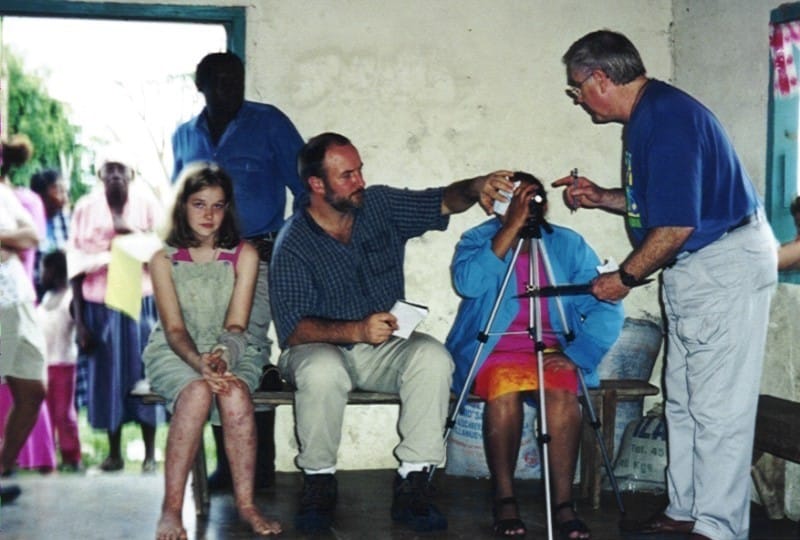
I remember running eye tests in remote villages in Nicaragua. We were trying to provide glasses for people who had very little access to this kind of help. Ron was the optician, but at that stage he didn’t have much Spanish, so I would ask the questions and translate. We would change a lens and ask the person looking through it, “Better or worse?”
Almost every time the answer came back: “Better.” The problem was that it wasn’t always better.
The villagers were grateful for what we were doing and didn’t want to appear ungrateful. So we learned not simply to accept the first answer. We had to slow down, change the lenses again, ask the question differently and gently test what we were being told. It mattered.
Many of the women had sewing to do in poor light. Families would sort through harvested beans, removing damaged ones before they were stored. If damaged beans were missed, they could rot and spoil what represented months of food.
So giving someone a pair of glasses wasn’t the goal. Helping them see clearly was the goal.
Looking back, I think there was a lesson there that went well beyond eyesight. Sometimes doing good isn’t enough. We need the wisdom to know whether the good we are doing is actually helping.
KNOWLEDGE — One word worth knowing
The word I want to notice is “equity.”
In Hebrew: מֵישָׁרִים — mêšārîm — straightness, uprightness, fairness or equity.
The word carries the sense of something being straight or level rather than crooked or distorted. The Greek Septuagint similarly uses the language of what is upright or straight. That gives me a picture I like. The lens can distort. Gratitude can distort an answer. My desire to help can even distort my judgement.
Wisdom keeps testing until I can see straight.
Proverbs isn’t describing wisdom as clever thinking detached from everyday life. It connects wisdom with righteousness, justice and equity — with learning to see situations clearly enough that our actions become right, fair and appropriate.
Before I can act wisely, I need to see clearly.
UNDERSTANDING — Seeing it through Strengths
Gallup Strength: Restorative
Restorative notices what isn’t working and wants to put it right. I’ve often described Restorative with the picture of a pothole. Some people will find a way around it. Restorative is more likely to stop and fill it in so everyone can travel that road more easily tomorrow. That’s a wonderful strength.
But Proverbs 1:3 adds an important challenge: don’t become so eager to fix the problem that you stop checking whether you’ve understood it correctly.
In Nicaragua, we could have handed someone the first pair of glasses that appeared to work and felt very pleased with ourselves. We had helped. Except perhaps we hadn’t. Mature Restorative isn’t satisfied merely because something has been done. It wants to know whether what was done actually addressed the real problem.
That matters enormously in leadership, coaching and relationships. Sometimes our desire to solve something becomes stronger than our desire to understand it.
Restorative sees the problem. Wisdom makes sure we’re seeing the right problem.
WISDOM — Turning insight into action
Covey: Habit 5 — Seek First to Understand, Then to Be Understood
The villagers were telling us, “Yes, that’s better.” We had to learn to listen beyond the words. Why are they saying better? Is their eyesight actually clearer? Are they trying to please us? Is there something we’re missing?
Habit 5 asks for that kind of listening.
It is easy to think that listening means remaining quiet while another person speaks. But genuine understanding requires more. It means becoming curious about what sits underneath the words.
In leadership, someone might say, “I’m fine.”
A team member might say, “I understand.”
A client might say, “Yes, that’s better.”
Wisdom doesn’t automatically assume those words tell the whole story.
Listening isn’t simply hearing the answer someone gives me. It’s doing the work necessary to understand what their answer means. And sometimes that requires another question.
New Testament Connection — James 1:22
Proverbs 1:3 moves wisdom from what I know to how I live. James says the same: “Do not merely listen to the word… Do what it says.” Wisdom that doesn’t change my behaviour is still only information.
Reflect: What do I already know that I now need to put into practice?
The evidence of learning is not what I know — it’s what I do differently.
REFLECTION TIME
- Where are you currently trying to fix something before fully understanding it?
- Whose answer might you be accepting because it confirms what you hoped to hear?
- Where might your good intentions be distorting your judgement?
- When someone tells you, “That’s better,” how do you know that it actually is?
- What might you need to see differently before deciding what to do next?
What will you do differently?
Good intentions matter. But good intentions alone don’t guarantee good outcomes. Sometimes wisdom means slowing down, changing the lens, asking another question and being willing to discover that what I thought was helping wasn’t quite right.
Good intentions want to help. Wisdom takes the time to see clearly.
THE VERSE FOCUS
Proverbs is beginning to build its picture of a wise life one step at a time:
Proverbs 1:1 — IDENTITY
Do I know who I am and where I belong?
Proverbs 1:2 — TEACHABILITY
Now that I know who I am, am I still willing to be taught?
Proverbs 1:3 — DISCERNMENT
Am I seeing clearly enough to act wisely?
Identity gives me somewhere to stand. Teachability keeps me growing. Discernment helps me see what to do next.
This lesson really struck a chord in me and took me back half a century of working. Woefully inexperienced, patience in short supply and wisdom yet to be attained.
Proverbs1:3 reinforces the importance of listening with patience, questioning, understanding and then acting according to the wisdom this verse teaches us.
I am still learning.
One of the great benefits of having been a Lifeline counsellor is the wonderful training in active listening I received. One of the key aspects of this in a conversation is to reflect back to the caller what you think you’ve understood, and to probe their feelings on their response when appropriate. My wife and I have also had training in the IMAGO dialogue technique, which provides important guardrails when discussing contentious issues. These guardrails are invariably effective in helping each party to understand the other’s point of view better when there is a dispute