
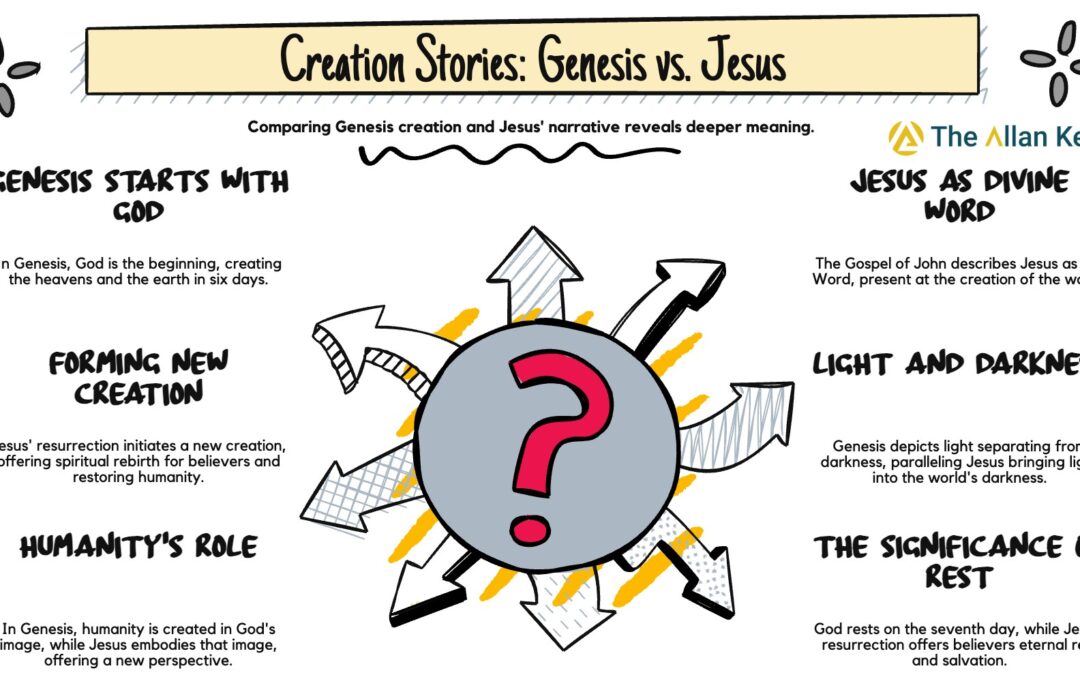
In the beginning
there is no speech,
only darkness.
Not wicked.
Just waiting.
God does not argue with it.
He does not explain Himself.
He speaks.
And light breaks—
not loud,
not violent,
just enough to change everything.
Things begin to take their place.
Sky from sea.
Land from water.
Order from chaos.
And then—
dust.
Hands in the dirt.
Breath in the lungs.
Humanity stands up, still marked by soil,
already carrying glory.
God looks long.
Then names it.
Very good.
But trust is a fragile thing
The first crack isn’t anger.
It’s suspicion.
Can God really be trusted?
The question slithers into the quiet
and the humans answer it themselves.
They reach.
They take.
They decide.
And the world does not shatter—
it tilts.
Eyes open,
but joy slips away.
Shame moves in.
God, once walked with, is now avoided.
The garden does not throw them out.
It simply lets them go.
East of Eden.
Hard ground.
Long days.
Death arrives politely at first,
then refuses to leave.
Then—God starts again
Not with thunder.
Not with fire.
With flesh.
“In the beginning,”
John writes, deliberately.
This time God does not speak light into the dark.
He steps into it.
A child.
A cry.
A borrowed manger.
Jesus doesn’t explain God—
He shows Him.
If you want to know God,
watch how Jesus listens.
Watch who He touches.
Watch what He refuses to walk past.
This is the image of God—
mud on His feet,
compassion in His eyes.
This is humanity, done properly.
Two gardens.
Two trees.
In Eden, a tree stands waiting.
Trust, or control.
The humans choose control.
Knowledge without God.
Freedom without dependence.
And they hide.
Much later—
another garden.
Another tree looming in shadow.
Jesus kneels.
Feels the weight.
Knows the cost.
And He does not reach.
He yields.
“Not my will.”
In the first garden,
humanity grasped.
In the second,
God surrendered.
Death steps forward
In Genesis, death slipped in quietly.
On the cross, it stands tall.
Public.
Brutal.
Certain.
The sky darkens again.
It feels like the old chaos returning.
Like creation unravelling backwards.
But death makes its oldest mistake.
It assumes Jesus will fight it.
Instead, He enters it.
And death—
unused to being met with love—
cannot keep Him.
The first day
It happens early.
Quietly.
A woman weeping
outside a tomb.
She mistakes Him for the gardener.
She is closer than she knows.
First day of the week.
First day again.
Light, once more,
but this time carrying scars.
Not a reset.
A renewal.
Not Eden restored—
but something stronger.
Where the story lands
Genesis ends with exile.
A garden behind us.
Flame at the gate.
The Gospels end with breath,
fear undone,
and a world cracked open again. A flame over our heads.
Creation tells us
who we were meant to be.
Jesus shows us
who God actually is.
The resurrection tells us
where it’s all going.
Not escape.
Not replacement.
Healing.
A world mended.
God dwelling with His people—
not above them,
not distant,
but with them.
One story.
Two movements.
Creation asks:
What went wrong?
Jesus answers—
not with theory,
but with His life.
And then He looks at us,
soil still on our boots,
and says:
Follow me.
The story is still being written.
And somehow—
by grace—
we’re in it.