
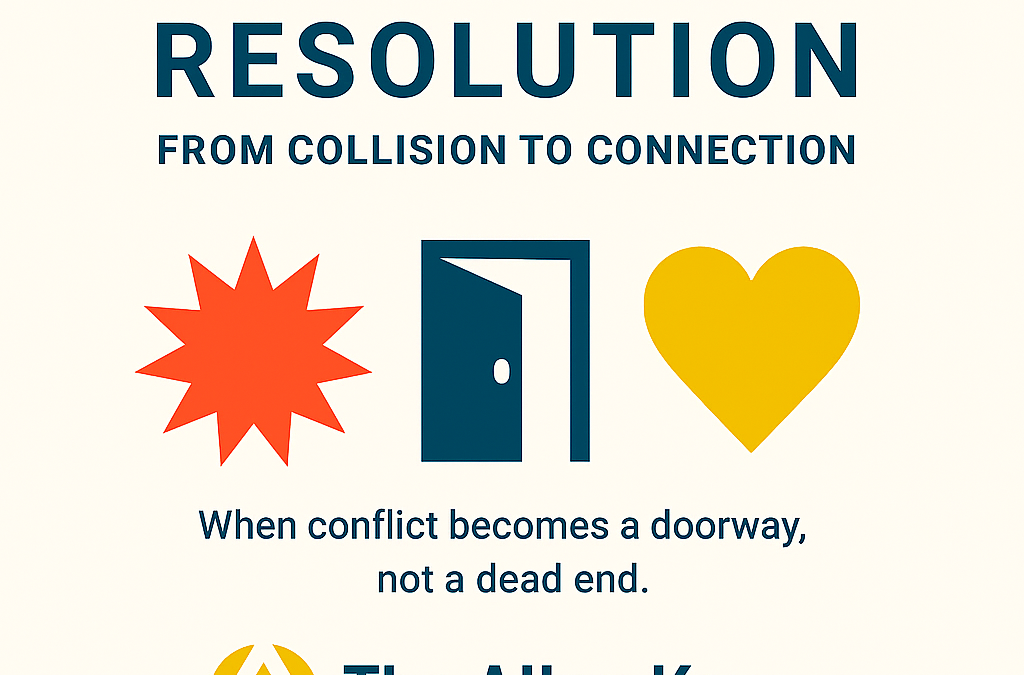
Conflict is inevitable wherever people care deeply—marriages, families, teams, churches, boards. The real issue isn’t whether we face conflict, but how we navigate it. Handled poorly, conflict erodes trust. Handled well, it becomes a doorway to deeper understanding, growth, and connection.
As Peter Drucker once observed, “The most important thing in communication is hearing what isn’t said.”
1. Start with Safety, Not Winning
The Prepare/Enrich model reminds us that healthy conflict begins with emotional safety. When people feel heard and respected, difficult conversations become possible. When they don’t, even small issues escalate.
This aligns closely with Gottman’s research, which shows that thriving relationships are not conflict‑free, but are marked by soft start‑ups and emotional attunement. It’s not the presence of disagreement that predicts failure—it’s defensiveness, contempt, criticism, and stonewalling.
“Seek first to understand, then to be understood.” — Stephen R. Covey
Scripture echoes this timeless wisdom:
“Everyone should be quick to listen, slow to speak and slow to become angry.” (James 1:19)
2. Understand Your Wiring Under Pressure
Conflict often intensifies because people bring different instincts to problem‑solving. Working Genius gives language to this dynamic. Some people move quickly to action (Galvanizing or Tenacity). Others slow things down to ask questions or weigh options (Wonder or Discernment).
When these differences aren’t understood, we label each other rather than learn from each other. But when we recognise them, conflict shifts from personal to productive.
As Margaret Wheatley writes, “There is no power greater than a community discovering what it cares about.”
3. Own Your Response
Covey’s Habit 1: Be Proactive is pivotal in conflict resolution. We can’t control the other person’s tone, words, or timing—but we are always responsible for our response.
Prepare/Enrich calls this taking responsibility without blame. Gottman calls it accepting influence. Scripture frames it as maturity:
“Do not repay evil for evil… as far as it depends on you, live at peace with everyone.” (Romans 12:17–18)
Conflict becomes transformative when we stop asking, “Who’s right?” and start asking, “What’s really going on here—and what is being invited to change?”
4. Move Toward Shared Meaning
The goal of conflict resolution isn’t agreement—it’s connection. Gottman describes this as building shared meaning. Covey would call it Think Win‑Win. Prepare/Enrich helps couples and teams articulate values, expectations, and hopes beneath the presenting issue.
At its best, conflict can deepen intimacy, strengthen culture, and realign purpose.
“Iron sharpens iron, and one person sharpens another.” (Proverbs 27:17)
—
A Gentle Invitation
If conflict feels repetitive, draining, or unresolved in your marriage, leadership role, or team—it may be time for a different conversation, guided by wiser tools and a steady presence.
At TheAllanKey, we create space for insight, clarity, and transformation—helping people move from reaction to responsibility, from collision to connection.
If this has stirred something in you, trust that curiosity.
Unlock the conversation.
Reach out to TheAllanKey and discover what conflict might be trying to teach you.