
Paul doesn’t start with instruction. He begins by setting a platform. And that may be the most pastoral thing he does.
1. Called Before Qualified
Paul introduces himself simply: “an apostle of Christ Jesus by the will of God.”
No defence. No comparison. No explanation.
For Paul calling comes before confidence. Always. Paul’s authority rests not in his clarity, but in his surrender. He knows who has positioned him — and that stabilises everything else.
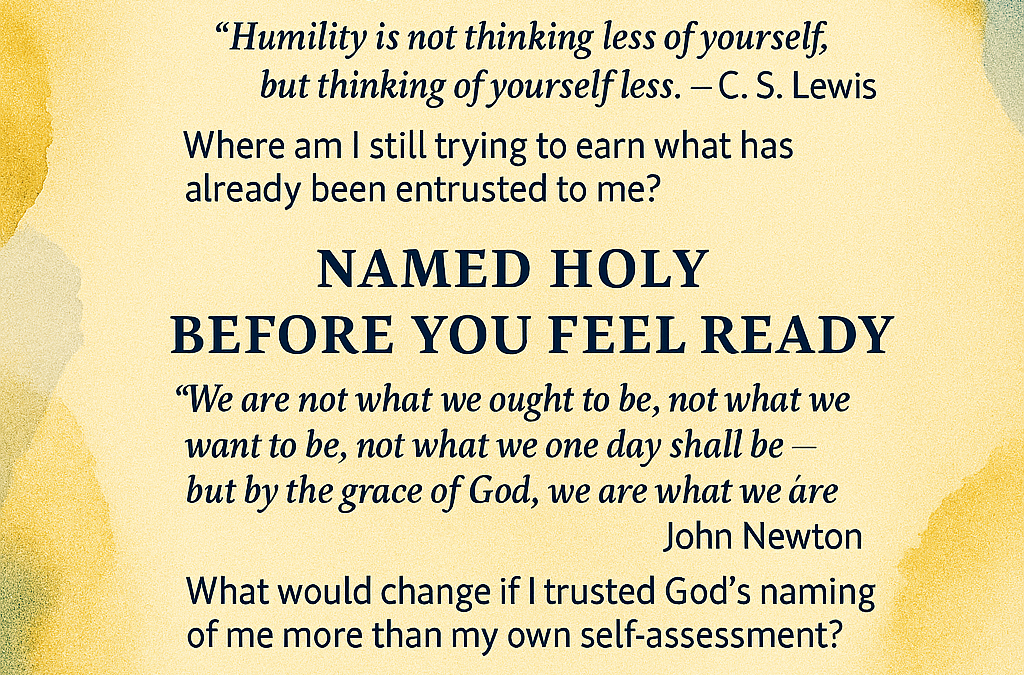
“Humility is not thinking less of yourself, but thinking of yourself less.” — C.S. Lewis
Where am I still trying to earn what has already been entrusted to me?
2. Named Holy Before You Feel Ready
Paul calls the believers “holy” and “faithful” — while they are still living ordinary, pressured lives in a demanding city.
This is grace language. God names us from outcome, no conditions. Our identity is spoken forward, not measured backward. Behaviour will catchup later — and sometimes slowly.
When holiness becomes something to achieve, it’s crushing. When it is something received, it’s transforming.
“We are not what we ought to be, not what we want to be, not what we one day shall be — but by the grace of God, we are what we are.” — John Newton
What would change if I trusted God’s naming of me more than my own self‑assessment?
3. Blessed Before You Begin
Paul explodes into praise: “…who has blessed us with every spiritual blessing in Christ.”
Past tense. Settled. Complete.
This reframes everything. We don’t strive towards blessing. We learn to live from it. Effort still matters — but it becomes response, not pressure. Obedience becomes alignment, not anxiety.
“Grace means that all of your mistakes now serve a purpose instead of serving shame.” — Brené Brown
Where am I acting as though blessing is still something I have to prove worthy of?
Ephesians opens with a quiet revolution:
Before you do anything — you are called, named, and blessed.
And that changes how everything else is lived.